
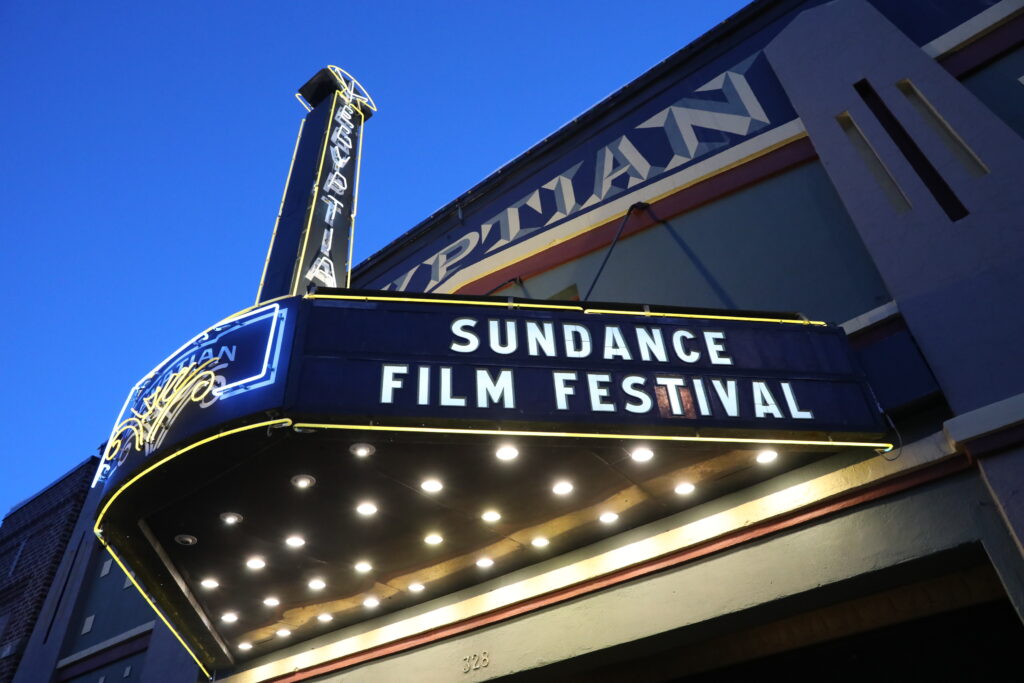
It's now official. On March 27, 2025, the Sundance Institute announced that Boulder, Colorado will become the permanent home of the Sundance Film Festival beginning in 2027. On February 24, 2026, the Institute confirmed dates and unveiled official venues: the festival's Colorado debut will run January 21–31, 2027.
This isn't a temporary relocation or a trial run. After more than four decades in Park City, Utah, Sundance is building its next chapter at the base of the Flatirons — and Boulder is already reshaping itself around the opportunity.
For brands, sponsors, and event planners, the implications are enormous. A new city means new venue inventory, new logistics, new audience dynamics, and a rare reset in the competitive landscape that hasn't existed since Sundance first put Park City on the map.
Here's what you need to know right now.
The Sundance Film Festival will make its Boulder, Colorado debut on January 21–31, 2027, marking the festival's permanent move from Park City, Utah. Official screening and programming venues span the city, including the Dairy Arts Center, Boulder Theater, Chautauqua Auditorium, multiple CU Boulder campus venues, Cinemark Century Boulder, eTown Hall, Boulder High School, and the Canyon Theater at Boulder Public Library. To put the opportunity in perspective, the 2024 festival in Park City generated $132 million in GDP, created 1,730 jobs, and attracted over 24,000 out-of-state visitors who spent an average of $735 per day. Colorado secured the festival with an incentive package totaling roughly $70 million, backed by a coalition that includes Visit Boulder, the Colorado Office of Economic Development and International Trade, CU Boulder, the Boulder Chamber, and the Stanley Film Center.
The Sundance Institute evaluated multiple cities before landing on Boulder, with Cincinnati also making the final round. Boulder's advantages weren't just logistical — they were philosophical.
At its core, Sundance has always been about independent spirit, community, and creative authenticity. Park City delivered that for 40 years, but its transformation into a luxury resort town created tension with the festival's grassroots identity. Boulder offered something different: a city of 105,000 residents with a walkable downtown, a major research university, a deeply rooted arts and tech scene, and a community that already lives the values Sundance promotes.
The practical case was strong too. Denver International Airport — one of the busiest in the country — sits 45 minutes away with vastly more direct flights than Salt Lake City. CU Boulder's campus provides institutional-grade venues (concert halls, auditoriums, screening facilities) that supplement the city's own theaters and cultural spaces. And Colorado's coalition put together a financial package reportedly worth nearly $70 million in state, city, and university support.
The festival will sprawl across the entire city rather than concentrating on a single street. Official screening venues include the Dairy Arts Center, Boulder Theater, Chautauqua Auditorium, eTown Hall, Cinemark Century Boulder, Boulder High School, and multiple CU Boulder spaces. Talks and programming extend to the Canyon Theater at the Boulder Public Library and additional locations still being finalized.
"As venue connectors working in this market daily, we believe Boulder's density of unique, non-corporate spaces is what sealed the deal. Park City had hotels. Boulder has character — independent theaters, historic auditoriums, mountain lodges, creative studios, and a food scene that rivals cities three times its size."
— The Inroads Boulder Team
For the past decade-plus, brand activations at Sundance have been dominated by a familiar roster. Acura has been a presenting sponsor for 15 consecutive years, running its House of Energy as a 300-person venue for panels, networking events, and nightlife. Adobe has maintained a 15-year presence, evolving from festival support to a dedicated branded space — Adobe on Main — featuring panel discussions, creator interviews, and art installations. Chase Sapphire has operated a two-story lounge exclusively for cardmembers, hosting film Q&As and celebrity chef events. Canon has run its Creative Studio for 16 years as an industry-only space for filmmakers and cinematographers. Shutterstock serves as the Official House Photographer. Audible, DoorDash, Patagonia, Cotopaxi, United Airlines, and others have all carved out their own activations.
In 2024, the festival reached a new milestone: every official event was fully sponsored for the first time in Sundance history.
The move to Boulder disrupts this established order in a way that creates genuine opportunity.
In Park City, Main Street was the axis of everything. Brands fought for storefronts, lounges, and pop-up spaces along a half-mile corridor, and relationships with venue owners and production partners had been cemented over years. That infrastructure doesn't transfer to Boulder.
Every brand — whether they've been at Sundance for 15 years or are exploring it for the first time — starts from roughly the same position when it comes to securing Boulder space. The brands that move first to understand Boulder's venue landscape, build relationships with local partners, and lock down locations will have a decisive advantage over those who wait for the ecosystem to mature.
"The brands who act early — locking down Boulder spaces 12–18 months out — will have a massive first-mover advantage. The ones who wait until Fall 2026 to start scouting will be fighting for whatever's left. We've seen this dynamic play out in every new-market festival situation, and the early movers always win."
— The Inroads Boulder Team
If your brand was priced out of Park City, or if Sundance was never on your radar because the competitive landscape felt locked up, Boulder changes the equation. The festival's city-wide format opens activation opportunities in neighborhoods, campus areas, and creative districts that didn't exist in Park City's single-corridor model. The cost structure is different. The audience is different — younger, more tech-forward, with a built-in local population of 105,000 residents plus 35,000 CU Boulder students who will engage with the festival in their own city.
If you're responsible for finding and securing event space — whether for a brand activation, corporate hospitality, a private screening, a VIP dinner, or a networking event — the Boulder move creates a fundamentally different planning challenge than Park City did.
Park City's event infrastructure was hotel-centric. Large resort properties controlled most of the meeting and banquet space, and relationships with a handful of venue managers could unlock a range of options. Boulder's venue market is the opposite: highly fragmented, spread across independent businesses, and not consolidated on any single platform.
There are roughly 360 event-capable spaces in the Boulder area, spanning historic theaters, industrial studios, breweries, mountain lodges, campus facilities, Pearl Street storefronts, and restaurant private dining rooms. Many of the most interesting venues aren't listed on directory platforms like Peerspace or Eventective. They're discovered through local knowledge and personal relationships.
This is exactly why we built Inroads Boulder — to be the curated connector between brands and the venues that will define Sundance's Boulder chapter. Our team has mapped the venue landscape, built relationships with space owners across every neighborhood, and we understand which spaces match which types of activations. Rather than sending you a directory listing, we match your event vision with specific venues and make the introductions that get deals done.
.png)